The Learning Never Stops
Forestry is a fulfilling endeavor that can involve the entire family.

Molly, Steve, Michael, Sophie and Pamela take a break from planting trees.
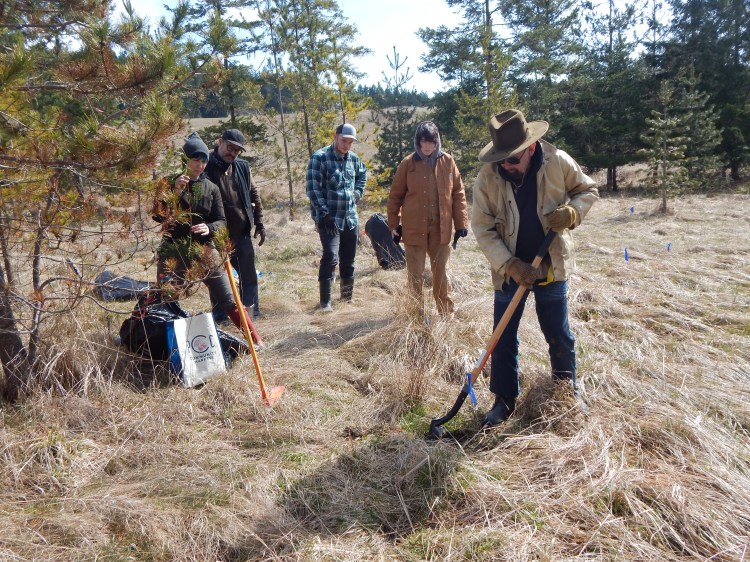
Replanting a 25 acre pasture has its challenges. Howard Gilbert, 88, models the tree planting process for the next generation of forest stewards.
A Little History
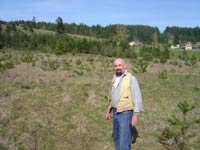
Howard Gilbert bought the 50-acre Lost Mountain Tree Farm in 1966. The property was part of the Machenheimer family homestead in Sequim, WA since the late 1800s. The land was logged and burned in the 1920s, leaving the north 25-acres to naturally regenerate a forest. The southern 25 acres south of Lost Mountain Road were converted to dairy pasture and a man-made pond was built. This area included a pioneer home, small orchard, barn, root cellar and milk separator.
Howard Gilbert began to actively manage the entire property as forest by 1973, taking on the challenging task of re-foresting the pasture. He married Pamela Roberts and together they replanted the pasture and purchased adjacent acres to add to the tree farm. The forest planning was done in consultation with WSU Forestry Program, Clallam County Conservation District, WA DNR and U.S. Soil Conservation Corps.

Lost Mountain Tree Farm included a 25-acre parcel of second growth forest on the north side of Lost Mountain Road. The forest was in poor condition when Howard Gilbert purchased the land – a classic “dog hair” overstocked stand. Most trees were Douglas Fir, with a mixture of Western Red Cedar and some Hemlock. In 1972 the forest was pre-commercially thinned, in 1991 it was commercially thinned and in August 2012 harvested at the age of about 85 years old. It was replanted the following February 2012 with 9000 Douglas Fir in about 10 foot spacing.
Recommendations have been made now to thin stands to 20 foot spacing to respond to climate change and decrease competition of the trees for water.
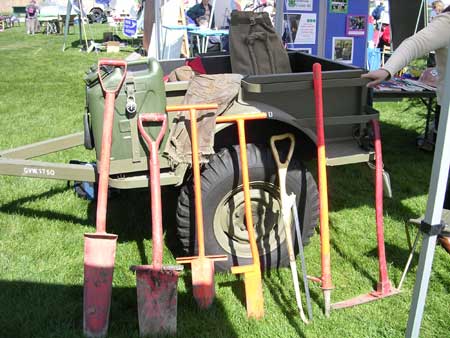
Choosing the right tree planting tool is essential to the success of your planting. Shovels vary in size, shape and weight, and are specially designed to meet specific challenges related to planting different sizes of trees within varied soil conditions.
Lost Mountain Tree Farm has clay soils in the pasture that can make it difficult to plant as the soil clings to the shovel during the planting process. Breaking up these dirt clods with the shovel before planting the tree helps prevent root compaction.
Howard liked to plant with a hoedad, using the short blade to scalp grass off the planting site. He would then raise the long blade over his head and bring it down forcefully onto the dirt, imbedding the blade in the soil. Using the handle to leverage the blade he would create a planting pocket, slide the tree into the pocket, gently removing the blade and closing the hole by tamping the dirt with his foot near the base of the tree stem.

Howard Gilbert was a percussionist in the Seattle Symphony, who also had a great passion for forestry. He loved working outdoors so tree planting and forest management helped keep him in good physical and mental condition. Every day held challenges and promises of success – a positive thing for anyone’s life!

Dave Erickson, logger and owner of Erickson Busheling.
Dave was a valuable partner to Lost Mountain Tree Farm. He helped us as a close friend and as a highly trained professional. Dave passed in 2023. He is greatly missed.
Why Get Involved in Forestry?
There has never been a better time to re-establish forest lands. The value forests provide include habitat for wildlife, recreation for humans, and carbon sequestration to help address climate change. Forests provide:
- Wildlife Habitat
- Erosion Protection
- Building Materials
- Jobs
- Carbon Sequestration

